
I’ve had a chance to travel and meet and talk with a lot of great people, but two of the conversations I had this summer will stay with me for a while.
The first was a conversation where I was told the benefits of Bio-Mass as an alternative energy source and why Bio-Mass was better for the environment instead of Nuclear Power. The second conversation was one where the topic of RCRA, Resource Conservation and Recovery Act, came up. The interesting thing about this conversation was that the speaker didn’t know what RCRA was or why it should be considered relevant to his business.
Now, here’s where it gets really interesting. The first conversation was with a nine year old boy and the second conversation was with a senior VP of a waste company!
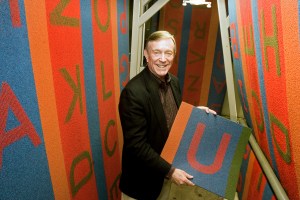 Ray Anderson, the founder of Interface, Inc. a recognized leader in sustainable business, and a friend died yesterday after a long battle with cancer. He was 77.
 I’ve had my share of name calling working in the environmental field over the years. They’ve ranged from “Nut” to “Professor”. Concepts that I’ve proposed have been met with resistance and laughter. One of my favorites was when I was describing the process of thermo-chemical technology, which helps convert waste materials into biofuels such as ethanol. Its technology is able to process diverse carbon-based feedstocks, including sorted municipal solid waste. I was quickly told that Buck Rogers didn’t work here and that feedstocks were what we feed the cows back home. But, guess what? A little over a year later a leading waste company announced a strategic investment in a company with a proprietary thermo-chemical technology!
 A lot has been mentioned in the past few weeks about innovation and the importance of innovation. President Obama told us that we had to out-innovate the rest of the world, consultants and business leaders are calling on companies to step to the plate and increase innovation. But, what does that really mean?
 I had an interesting call yesterday. I was asked if I thought Social Media had a role to play within the sustainability activities of the caller’s organization. Like any good listener I replied, “Why do you ask?”
 Not to long ago I was in a meeting to discuss sustainability initiatives. I looked around the table and saw representatives from marketing, environmental, legal, and corporate social responsibility. What I didn’t see was anyone from the Facilities Management group or the Architectural Design and Build group. The meeting began and we talked about all of the buzz topics; green media, social programs for young people, energy usage and of course, carbon footprint. Every time I hear the discussion of carbon footprint and someone gives a statistic about how many cars that equals that we have taken off the road I’m reminded of Joel Makeower’s comment ” I sometimes wonder whether adding up all the cars-taken-off-the road marketing claims would yield a number that exceeds the actual number of cars on the road.”
 Recently I had the opportunity to speak with a group of college students regarding sustainability. They had a list of questions that were centered around career opportunities. Such as, what kind of jobs are available, what kind of education and experience are required and will sustainability persist or will it fade away?


 Remember the expression, “You can’t see the forest for the trees”? That expression came to mind this past week during a discussion on sustainability.
 I was in a meeting recently and one of the designers in the room said “I think we should use the newest approach to design, biomimicry.” I almost fell out of my chair. “Newest approach?” This approach isn’t new. Da Vinci studied birds in flight to better understand how man could fly.
 I’ve written about sustainability and its impacts for and on big business and large organizations in the past. I’ve tried to keep the topics focused on how sustainability can help them adjust or modify their policies, practices and procedures.
 Tell me if this sounds familiar. You’re gathered in a conference room, the senior leader in the room says that the purpose of this meeting is to establish your company’s environmental, sustainability, or recycling goals, pick your topic. Now here’s where it gets good. The meeting is scheduled for 30 minutes and she needs the goals for her meeting with the executives tomorrow.
 Low hanging fruit…you’ve heard it before. When you are trying to get your organization started down the sustainability path, consultants and authors tell you to reach for the low hanging fruit. They want you to succeed, so they point you in the direction of quick wins. For many of them your waste stream is one of the first places they encourage you to look, and by waste stream they are referring to what you place in a dumpster. They talk about examining what it is that you are placing into the dumpster. They want you to be able to identify the items that you are throwing away and re-think how they got there. This is something you should do, but lately I’ve had several companies remark when I was introduced to them as the guy that is going to help us identify waste reduction measures say, “Oh, you’re the guy who is going to start our recycling program.” In my head, I’m thinking, “Oh, if it were only that easy!”
 Over and over I have the same discussion with sustainability professionals, they want to know what they can do to enhance their presentations to fully engage their listeners, to open their audience’s mind to the possibilities that exist. Many times when they have a chance to talk about what they were doing or what they were planning to do within their organization they felt as if their message and plans were falling on deaf ears. Their audience was constantly checking their blackberry’s or looking as if they wished they were in any place other than sitting in a room listening to him or her speak.
 One of my favorite television programs is the Andy Griffith Show, and one of my all time favorite episodes is “Bargain Day”, or as some refer to it, the “Call the Man” episode. In the episode Aunt Bee, searching for a bargain, buys 150 pounds of meat from the new butcher in town only to have her freezer go on the fritz! I love this episode so much that I designed a training class around it.
 Growing up in the United States I’ve heard America referred to as “The Land of Plenty” or “The Disposable Society”. The quote “Go West young man” was often said to me as a young man, maybe jokingly or perhaps they were serious, while I was wondering what to do as I grew up. (And before you email, yes, the quote first appeared as the title to the 1851, Terre Haute Express editorial written by Mr. Soule and is often credited to Mr. Greeley.)
 When starting to look at using sustainability as a business strategy it is not surprising that many organizations first start looking at their waste processes.
  In 1994 John Elkington coined the term, “Triple Bottom Line” (TBL). He has written that he was looking for a new language to express the expansion of the environmental agenda that his company
  One of the questions that I like to ask when I’m working with a company on their sustainability program is “How do you define sustainability for your organization?” This is not meant to confuse or anger the VPs, Directors and Mangers in the room, even though it quite often does.
  “Green is the new black”, “It’s not easy being green” or “Clean and Green” take your pick. It seems like we have an abundant supply of green marketing slogans and they get the mainstream press. I guess it makes sense, they are marketing materials and companies are paying big bucks to get their message heard above everyone else’s. I think that this may also be one of the reasons why so many people only view sustainable development as a marketing activity. There is even a website that is dedicated to evaluating green advertising,
 For years we in the business world have had an adversarial relationship with the environment. Think about it, we even call it Environmental Compliance. Compliance, doesn’t that mean that we are meeting the established rules. We saw it as a cost of doing business, something that we had to do. We didn’t look at it as a possible area of differentiation, innovation or cost reduction. It was just a problem child that we had to deal with.
  What is sustainability? That’s a question that I get asked over and over. When I’m asked that, I want to give them a good-old Jethro Gibbs whack to the back of their head. You know the one I’m talking about. Mark Harmon, NCIS, whacking Tony on the back of his head whenever he says or does something stupid.
 Ok, so what does a movie have to do with the “Seed of Sustainability”? That’s the question that I got after my last post. It is a simple answer really, Storytelling!
 Thirty-two years ago today, Stars Wars was released. A generation would be exposed to a new type of motion picture and the seed of sustainability was born within me. The funny thing is, I just didn’t know it yet.
 Jesse Stallone