
I’ve had a chance to travel and meet and talk with a lot of great people, but two of the conversations I had this summer will stay with me for a while.
The first was a conversation where I was told the benefits of Bio-Mass as an alternative energy source and why Bio-Mass was better for the environment instead of Nuclear Power. The second conversation was one where the topic of RCRA, Resource Conservation and Recovery Act, came up. The interesting thing about this conversation was that the speaker didn’t know what RCRA was or why it should be considered relevant to his business.
Now, here’s where it gets really interesting. The first conversation was with a nine year old boy and the second conversation was with a senior VP of a waste company!
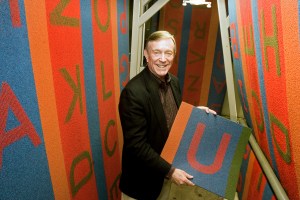 Ray Anderson, the founder of Interface, Inc. a recognized leader in sustainable business, and a friend died yesterday after a long battle with cancer. He was 77.
 I’ve had my share of name calling working in the environmental field over the years. They’ve ranged from “Nut” to “Professor”. Concepts that I’ve proposed have been met with resistance and laughter. One of my favorites was when I was describing the process of thermo-chemical technology, which helps convert waste materials into biofuels such as ethanol. Its technology is able to process diverse carbon-based feedstocks, including sorted municipal solid waste. I was quickly told that Buck Rogers didn’t work here and that feedstocks were what we feed the cows back home. But, guess what? A little over a year later a leading waste company announced a strategic investment in a company with a proprietary thermo-chemical technology!
 A lot has been mentioned in the past few weeks about innovation and the importance of innovation. President Obama told us that we had to out-innovate the rest of the world, consultants and business leaders are calling on companies to step to the plate and increase innovation. But, what does that really mean?
 I had an interesting call yesterday. I was asked if I thought Social Media had a role to play within the sustainability activities of the caller’s organization. Like any good listener I replied, “Why do you ask?”
 Not to long ago I was in a meeting to discuss sustainability initiatives. I looked around the table and saw representatives from marketing, environmental, legal, and corporate social responsibility. What I didn’t see was anyone from the Facilities Management group or the Architectural Design and Build group. The meeting began and we talked about all of the buzz topics; green media, social programs for young people, energy usage and of course, carbon footprint. Every time I hear the discussion of carbon footprint and someone gives a statistic about how many cars that equals that we have taken off the road I’m reminded of Joel Makeower’s comment ” I sometimes wonder whether adding up all the cars-taken-off-the road marketing claims would yield a number that exceeds the actual number of cars on the road.”
 Recently I had the opportunity to speak with a group of college students regarding sustainability. They had a list of questions that were centered around career opportunities. Such as, what kind of jobs are available, what kind of education and experience are required and will sustainability persist or will it fade away?

 Jesse Stallone