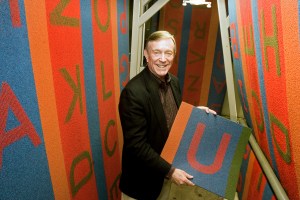
In 1994, Interface founder and chairman Ray Anderson set an audacious goal for his commercial carpet company: to take nothing from the earth that can’t be replaced by the earth. Now, in the most inspiring business book of our time, Anderson leads the way forward and challenges all of industry to share that goal.
The Interface story is a compelling one: In 1994, making carpets was a toxic, petroleum-based process, releasing immense amounts of air and water pollution and creating tons of waste. Continue reading
 Tell me if this sounds familiar. You’re gathered in a conference room, the senior leader in the room says that the purpose of this meeting is to establish your company’s environmental, sustainability, or recycling goals, pick your topic. Now here’s where it gets good. The meeting is scheduled for 30 minutes and she needs the goals for her meeting with the executives tomorrow.
 Low hanging fruit…you’ve heard it before. When you are trying to get your organization started down the sustainability path, consultants and authors tell you to reach for the low hanging fruit. They want you to succeed, so they point you in the direction of quick wins. For many of them your waste stream is one of the first places they encourage you to look, and by waste stream they are referring to what you place in a dumpster. They talk about examining what it is that you are placing into the dumpster. They want you to be able to identify the items that you are throwing away and re-think how they got there. This is something you should do, but lately I’ve had several companies remark when I was introduced to them as the guy that is going to help us identify waste reduction measures say, “Oh, you’re the guy who is going to start our recycling program.” In my head, I’m thinking, “Oh, if it were only that easy!”
 Over and over I have the same discussion with sustainability professionals, they want to know what they can do to enhance their presentations to fully engage their listeners, to open their audience’s mind to the possibilities that exist. Many times when they have a chance to talk about what they were doing or what they were planning to do within their organization they felt as if their message and plans were falling on deaf ears. Their audience was constantly checking their blackberry’s or looking as if they wished they were in any place other than sitting in a room listening to him or her speak.
 Growing up in the United States I’ve heard America referred to as “The Land of Plenty” or “The Disposable Society”. The quote “Go West young man” was often said to me as a young man, maybe jokingly or perhaps they were serious, while I was wondering what to do as I grew up. (And before you email, yes, the quote first appeared as the title to the 1851, Terre Haute Express editorial written by Mr. Soule and is often credited to Mr. Greeley.)
 In 1994 John Elkington coined the term, “Triple Bottom Line” (TBL). He has written that he was looking for a new language to express the expansion of the environmental agenda that his company
  One of the questions that I like to ask when I’m working with a company on their sustainability program is “How do you define sustainability for your organization?” This is not meant to confuse or anger the VPs, Directors and Mangers in the room, even though it quite often does.
  “Green is the new black”, “It’s not easy being green” or “Clean and Green” take your pick. It seems like we have an abundant supply of green marketing slogans and they get the mainstream press. I guess it makes sense, they are marketing materials and companies are paying big bucks to get their message heard above everyone else’s. I think that this may also be one of the reasons why so many people only view sustainable development as a marketing activity. There is even a website that is dedicated to evaluating green advertising,
 For years we in the business world have had an adversarial relationship with the environment. Think about it, we even call it Environmental Compliance. Compliance, doesn’t that mean that we are meeting the established rules. We saw it as a cost of doing business, something that we had to do. We didn’t look at it as a possible area of differentiation, innovation or cost reduction. It was just a problem child that we had to deal with.
  Jesse Stallone