
I’ve had a chance to travel and meet and talk with a lot of great people, but two of the conversations I had this summer will stay with me for a while.
The first was a conversation where I was told the benefits of Bio-Mass as an alternative energy source and why Bio-Mass was better for the environment instead of Nuclear Power. The second conversation was one where the topic of RCRA, Resource Conservation and Recovery Act, came up. The interesting thing about this conversation was that the speaker didn’t know what RCRA was or why it should be considered relevant to his business.
Now, here’s where it gets really interesting. The first conversation was with a nine year old boy and the second conversation was with a senior VP of a waste company!
 A lot has been mentioned in the past few weeks about innovation and the importance of innovation. President Obama told us that we had to out-innovate the rest of the world, consultants and business leaders are calling on companies to step to the plate and increase innovation. But, what does that really mean?
 Not to long ago I was in a meeting to discuss sustainability initiatives. I looked around the table and saw representatives from marketing, environmental, legal, and corporate social responsibility. What I didn’t see was anyone from the Facilities Management group or the Architectural Design and Build group. The meeting began and we talked about all of the buzz topics; green media, social programs for young people, energy usage and of course, carbon footprint. Every time I hear the discussion of carbon footprint and someone gives a statistic about how many cars that equals that we have taken off the road I’m reminded of Joel Makeower’s comment ” I sometimes wonder whether adding up all the cars-taken-off-the road marketing claims would yield a number that exceeds the actual number of cars on the road.”
  Recently I had the opportunity to speak with a group of college students regarding sustainability. They had a list of questions that were centered around career opportunities. Such as, what kind of jobs are available, what kind of education and experience are required and will sustainability persist or will it fade away?

 I was in a meeting recently and one of the designers in the room said “I think we should use the newest approach to design, biomimicry.” I almost fell out of my chair. “Newest approach?” This approach isn’t new. Da Vinci studied birds in flight to better understand how man could fly.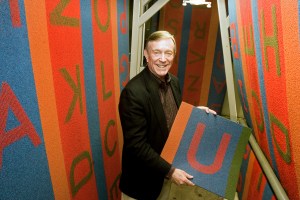
 Low hanging fruit…you’ve heard it before. When you are trying to get your organization started down the sustainability path, consultants and authors tell you to reach for the low hanging fruit. They want you to succeed, so they point you in the direction of quick wins. For many of them your waste stream is one of the first places they encourage you to look, and by waste stream they are referring to what you place in a dumpster. They talk about examining what it is that you are placing into the dumpster. They want you to be able to identify the items that you are throwing away and re-think how they got there. This is something you should do, but lately I’ve had several companies remark when I was introduced to them as the guy that is going to help us identify waste reduction measures say, “Oh, you’re the guy who is going to start our recycling program.” In my head, I’m thinking, “Oh, if it were only that easy!”
 Over and over I have the same discussion with sustainability professionals, they want to know what they can do to enhance their presentations to fully engage their listeners, to open their audience’s mind to the possibilities that exist. Many times when they have a chance to talk about what they were doing or what they were planning to do within their organization they felt as if their message and plans were falling on deaf ears. Their audience was constantly checking their blackberry’s or looking as if they wished they were in any place other than sitting in a room listening to him or her speak.
 Jesse Stallone